


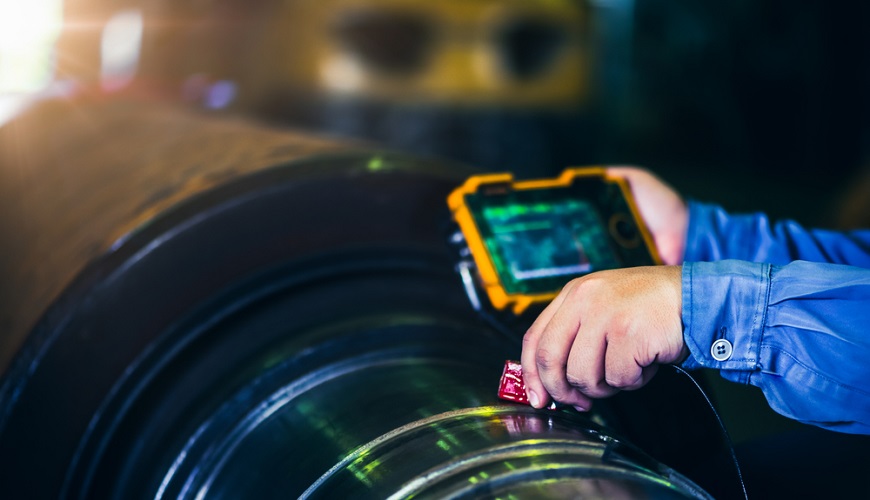
What is Chemical Analysis Testing? Why Use It?
Chemical Analysis Testing (PMI) is a non-destructive and systematic method for examining and analyzing materials, especially metals, to ensure they meet safety and integrity standards. It analyzes the chemical composition of materials to ensure that the materials are suitable for use in specific conditions. Proper inspection and identification of conditions before major failures and defects occur can prevent catastrophic accidents and unplanned equipment outages, and reduce maintenance costs.
Why is Chemical Analysis Testing Important?
Chemical analysis testing of materials is important for the following reasons:
Ensuring Correct Alloy Use: Confirms that the correct alloy is used in the production of products and parts.
Filler Material Inspection: Ensures that the filler materials in the welded components are suitable or not.
Identification of mixed alloys: Helps to identify any alloy mixtures.
Standards Compliance: Checks whether materials meet established standards and specifications.
Regulatory Compliance: Helps to comply with government laws and other legal regulations.
Legal Risk Reduction: Safety standards reduce companies’ liability for risks.
Failure Analysis: PMI plays an important role in identifying and fixing problems to prevent future failures.
Techniques Used in Chemical Analysis Testing:
Optical Emission Spectroscopy (OES): In this method, an electric arc excites the atoms of the sample to emit a spectrum of light characteristic of each element. The light is separated into its constituent spectra and measured based on calibration curves. OES instruments are divided into two categories:
Analytical instruments: These instruments have a visible light output that requires analysis by the user and can detect up to 16 elements, depending on the user’s expertise.
Portable instruments: These instruments are capable of laboratory-quality analysis and detection of carbon (C) and include a probe that produces a vapor of the material by creating a spark. The atoms and ions in the vapor produce a spectrum of light that is measured to identify the elements in the material.
X-ray fluorescence (XRF) analyzer: This technique is very suitable for on-site analysis due to its portability and is also capable of identifying metallic materials and vital elements of the material. However, this instrument is not suitable for identifying pure carbon and steel materials and cannot detect carbon and some other light elements.
Laser Induced Breakdown Spectroscopy (LIBS): This technique, which has been used in laboratories for years, is now available in handheld form. LIBS is one of the fastest technologies for identifying and analyzing metal alloys.