

1 What is wellhead equipment?
After drilling an oil or gas well, a set of equipment is required to control and regulate the production of oil and gas.
This equipment is called wellhead equipment.
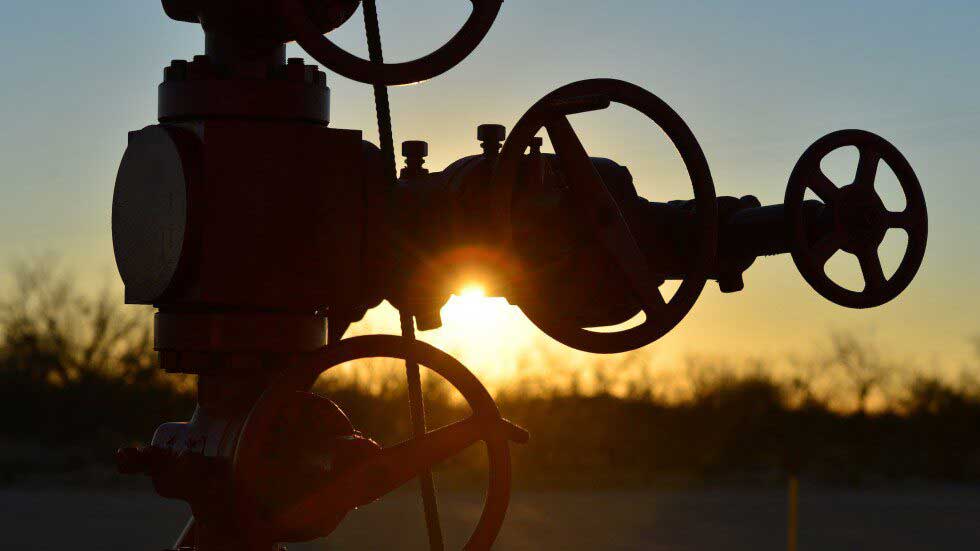
Generally, the wellhead has equipment installed at the wellhead to regulate and monitor the extraction of hydrocarbons from underground wells. This equipment prevents oil or natural gas from leaking out of the well and from blowing high pressure due to the formation.
Wells that are under high pressure usually require wellheads that can withstand high pressure from escaping gases and liquids upwards.
These wells impose pressures of up to 140 MPa (1,400 bar) on the equipment.
Wellheads and wellhead equipment may be located on offshore platforms, in subsea locations, or on land.
These wells are cemented in place and are usually held in place.
However, with exploratory wells, the wellhead equipment may be recovered for later reuse.
In addition, the wellhead equipment is designed to support casing and tubing strings, which may also be hung from a Christmas tree.
In this way, the wellhead equipment creates a seal between the various strings and allows access to the annuli between them.
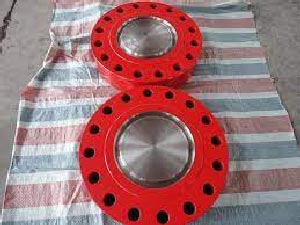
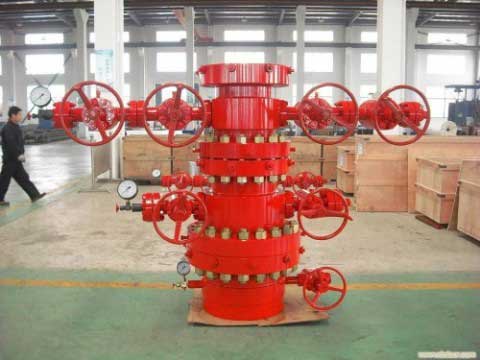
2 types of wells and well equipment:
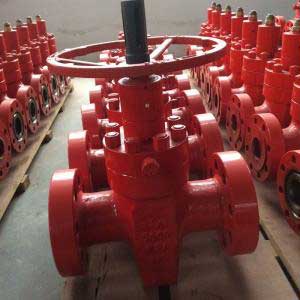
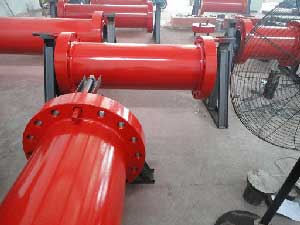
Oil and gas wellhead equipment can be divided into three types:
Flow well equipment
Pumping wellhead equipment
Gas wellhead equipment
Oil and gas wells come in different types and sizes depending on the size and depth of the well, and each of these types of equipment has its own equipment.
These equipments are different for onshore and offshore or submarine and ultra-deep wells.
In general, the size of the wellbore is determined by the size of the casing or pipe that passes through the wellbore.
Larger wells require larger wellheads to handle the increased pressure and flow of oil or gas.
In addition, wells can have different sizes depending on the type of well.
For example, offshore wells must be designed to withstand harsher environments and harsher conditions than onshore wells.
Also, the size of the well head changes depending on the production phase of the well.
For example, in the drilling phase, the wellhead is smaller and the equipment simpler than in the production phase, when the wellhead must accommodate multiple flow paths, control and monitoring valves.